

The liver is a vital organ—we depend on a properly functioning liver to keep us alive.
A wide variety of diseases, conditions, and injuries may affect the liver, and the damage caused by each tends to progress in a similar pattern.

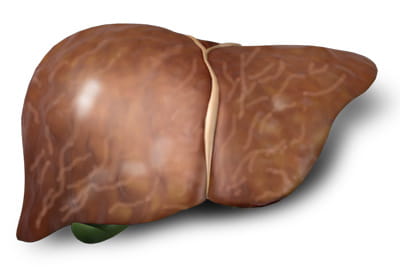



The most common type of primary liver cancer is called hepatocellular carcinoma (HCC)
Roughly 40,000 Americans are diagnosed with liver cancer each year, and that number is rising.2 If you have liver disease or are at high risk for it, your doctor may recommend a program to watch closely for the earlier signs of liver cancer. Catching liver cancer in the earliest stages may improve your chances for survival, and keep a number of treatment options open. That’s why watching for the early stages of cancer is key.3,4

Finding out you are at risk for liver cancer can be scary. It’s important to know your risk so you can find cancer as early as possible.
Risk Factors
Damaged liver cells are more likely to become cancerous
Cancer often develops as the result of cells that have become damaged over time. Cell damage can occur due to a variety of causes. The most common form of cancer that starts in the liver is called hepatocellular carcinoma, or HCC.5,6

In the United States, HCC has been linked to a condition known as cirrhosis. In cirrhosis, liver tissue that has become damaged over time is slowly replaced by scar tissue.7 This growing scar tissue makes it harder for the liver to do its job and raises the risk of cancer developing. Cirrhosis may be caused by a variety of things, including chronic viral infections, heavy alcohol use, fatty liver, and some rare genetic conditions.8

9/10
Nine out of 10 people who develop the most common type of liver cancer have cirrhosis.9
Common risk factors for liver cancer and cirrhosis8
Chronic Infection with Hepatitis B (HBV) or Hepatitis C (HCV)
Hepatitis causes inflammation (swelling) of the liver and cirrhosis. Long-lasting damage from HBV and HCV can increase the risk of liver cancer.8
Heavy Alcohol Use
Alcoholic liver disease can cause cirrhosis and can also increase the risk of liver cancer. Heavy alcohol users who have cirrhosis have 10 times more risk of developing liver cancer compared with heavy alcohol users who do not have cirrhosis.8
Fatty Liver
Nonalcoholic steatohepatitis (NASH) is another condition that can cause cirrhosis and increase the risk of liver cancer.8 NASH is a form of nonalcoholic fatty liver disease (NAFLD)—inflammation due to a buildup of fat in the liver. NASH is more common in people who are obese and those with type 2 diabetes. It is possible for people with NASH/NAFLD who do not have cirrhosis to develop liver cancer.9
Other Factors
There are other risk factors for liver cancer, including cigarette smoking, inherited conditions that cause excessive iron or copper storage in the liver, and other rare genetic conditions.8

Detection & Monitoring
An early warning system is in place to help
When liver cancer does occur, there is a close connection between how advanced it is and the expected outcome.2 The odds of successful treatment are most favorable when the cancer is found in early stages, before it spreads. This is why early detection is so important.4

If you have risk factors for liver cancer such as cirrhosis, your doctor may recommend ongoing testing.10 Tests are ordered to identify those who need more involved (confirmatory) testing, such as imaging tests or biopsies.
The benefit of ongoing testing is early detection
If your doctor has recommended careful watching for liver cancer and ordered tests, it is important to understand why the testing is important.13 Fundamentally, the purpose of ongoing testing is to find the cancer early, when the chance of successful treatment is greatest. When cancer is detected in later stages it is harder to get under control and has worse outcomes.10

Early detection is the key. Today there is a new way to help detect liver cancer—the Oncoguard® Liver solution. This solution includes a single, convenient blood test and a program to help patients stay up-to-date with testing. The benefit of the Oncoguard® Liver solution is its proven ability to help find liver cancer at an early stage of disease.
The Oncoguard® Liver solution. Exactly what’s needed today.
Learn about a new way to detect liver cancer.
The term liver cancer is used to represent the most common form of liver cancer, hepatocellular carcinoma (HCC).
References: 1. American Liver Foundation website. Progression of liver disease. Available at: https://liverfoundation.org/for-patients/about-the-liver/the-progression-of-liver-disease/. Accessed April 18, 2024. 2. Siegel RL, Miller KD, Jemal A. Cancer statistics, 2020. CA Cancer J Clin. 2020;70(1):7-30. 3. Choi DT, Kum HC, Park S, et al. Hepatocellular carcinoma screening is associated with increased survival of patients with cirrhosis. Clin Gastroenterol Hepatol. 2019;17(5):976-987.e4. 4. National Cancer Institute. Surveillance, Epidemiology, and End Results Program website. Cancer stat facts: liver and intrahepatic bile duct cancer. Available at: https://seer.cancer.gov/statfacts/html/livibd.html. Accessed April 18, 2024. 5. Tholey D. Hepatocellular carcinoma. Merck Manual consumer version website. Updated April 2020. Accessed April 18, 2024. https://www.merckmanuals.com/home/liver-and-gallbladder-disorders/tumors-of-the-liver/hepatocellular-carcinoma. 6. Bray F, Ferlay J, Soerjomataram I, et al. Global cancer statistics 2018: GLOBOCAN estimates of incidence and mortality worldwide for 36 cancers in 185 countries. CA Cancer J Clin. 2018;68(6):394-424. 7. Heimbach JK, Kulik LM, Finn RS, et al. AASLD guidelines for the treatment of hepatocellular carcinoma. Hepatology. 2018;67(1):358-380. 8. National Cancer Institute website. Liver (hepatocellular) cancer prevention (PDQ®)–patient version. Updated April 21, 2020. Accessed April 18, 2024. https://www.cancer.gov/types/liver/patient/liver-prevention-pdq. 9. National Institutes of Health. National Institute of Diabetes and Digestive and Kidney Diseases. Definition & facts of NAFLD & NASH. Accessed April 18, 2024. 10. Marrero JA, Kulik LM, Sirlin CB, et al. Diagnosis, staging, and management of hepatocellular carcinoma: 2018 practice guidance by the American Association for the Study of Liver Diseases. Hepatology. 2018;68(2):723-750. 11. Benson AB III, D'Angelica MI, Abbott DE, et al. NCCN Guidelines Insights: Hepatobiliary Cancers, Version 1.2017. J Natl Compr Canc Netw. 2020;15(5):563-573. 12. Singal AG, Pillai A, Tiro J. Early detection, curative treatment, and survival rates for hepatocellular carcinoma surveillance in patients with cirrhosis: a meta-analysis. PLoS Med. 2014;11(4):e1001624.1-20. 13. National Cancer Institute website. Liver (hepatocellular) cancer screening (PDQ®)—patient version. Updated March 22, 2019. Accessed April 18, 2024. https://www.cancer.gov/types/liver/patient/liver-screening-pdq.